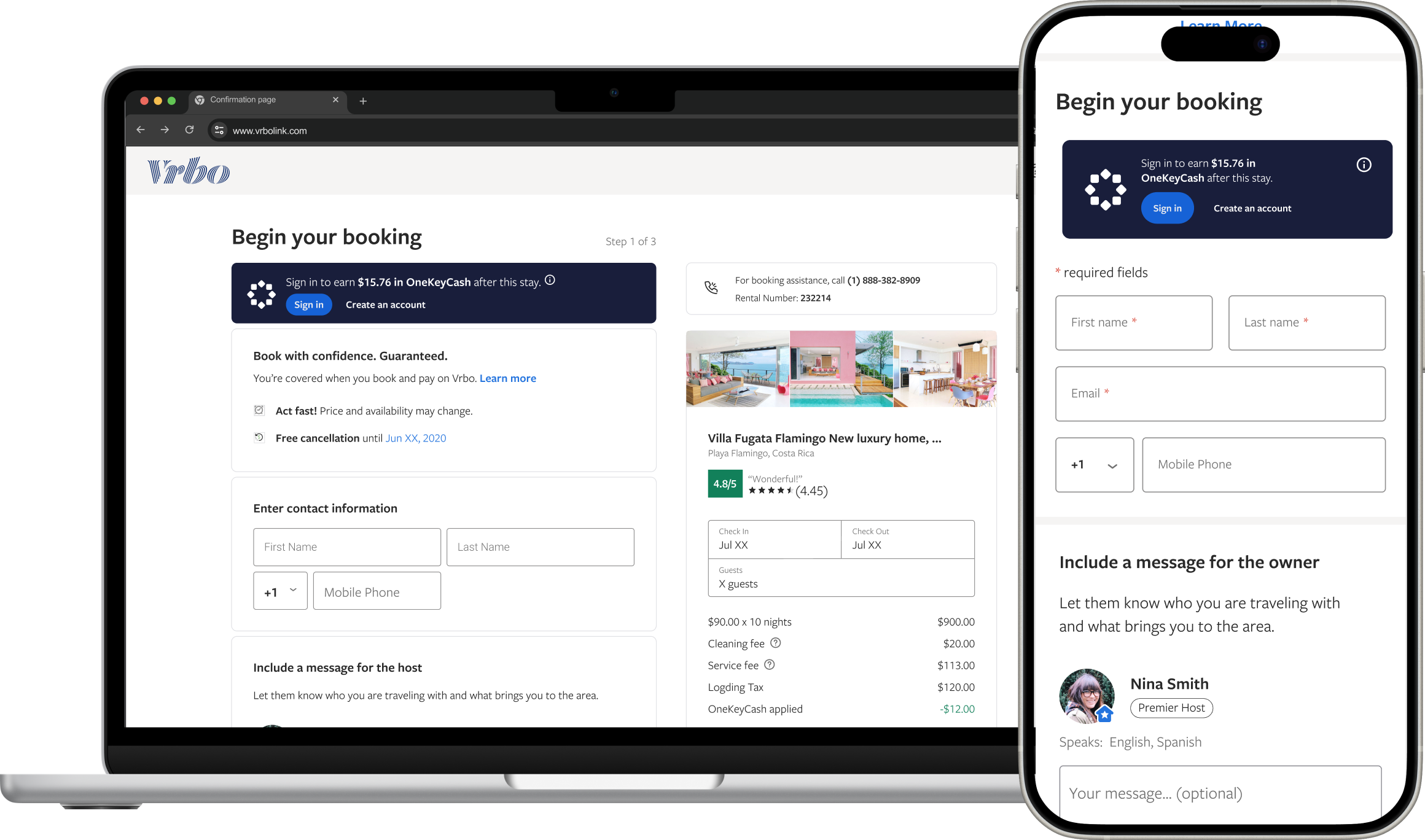
Increasing authentication through personalized moments in the shopping funnel.
Impact
Illustrative example only. Not a final or production UI.
What is this?
Context
Existing sign-in entry points primarily served returning users and had limited impact on converting guests. This case explores how authentication could be introduced contextually across the shopping funnel to drive member growth.
Why does it matter?
The Problem
A large portion of users completed bookings as guests, limiting insight into their preferences and long-term marketing engagement. Without a clear motivation to sign in, this resulted in missed opportunities for retention and repeat revenue.
How was it solved?
Solution
We reframed authentication from a static entry point to a context-driven interaction by defining when and why it mattered. Research insights aligned authentication prompts with user intent across the shopping funnel.
What changed?
Impact
Within 5 days of testing, this approach delivered a 16% increase in authentication rate, validating contextualization as a scalable driver of member conversion.
My role in this case
DECISION PROCESS
Users can choose to sign in to access member benefits or continue as guests for faster checkout. While guest bookings still generate revenue, they limit our ability to build loyalty, personalize experiences, and drive repeat business. Product analysis showed that users who authenticate earlier in the shopping funnel are significantly more likely to complete a booking.
Although authentication entry points existed across all page types, they were not meaningfully impacting sign-in rates. The core question became not where sign-in was available, but why users were not motivated to use it. This led us to focus on understanding what drives users to become members and how authentication could feel relevant rather than optional.
Product data indicated that travelers who authenticate earlier in the funnel are up to 4× more valuable from a conversion perspective. Based on projected interaction uplift, this approach could unlock 75,000+ additional successful sign-ins per month.
Any authentication interaction needed to meet the following constraints:
Before committing to large quantitative research, we first evaluated why existing entry points underperformed. This included a competitive analysis to identify common patterns that successfully motivate sign-in, as well as an audit of current authentication placements across page types.
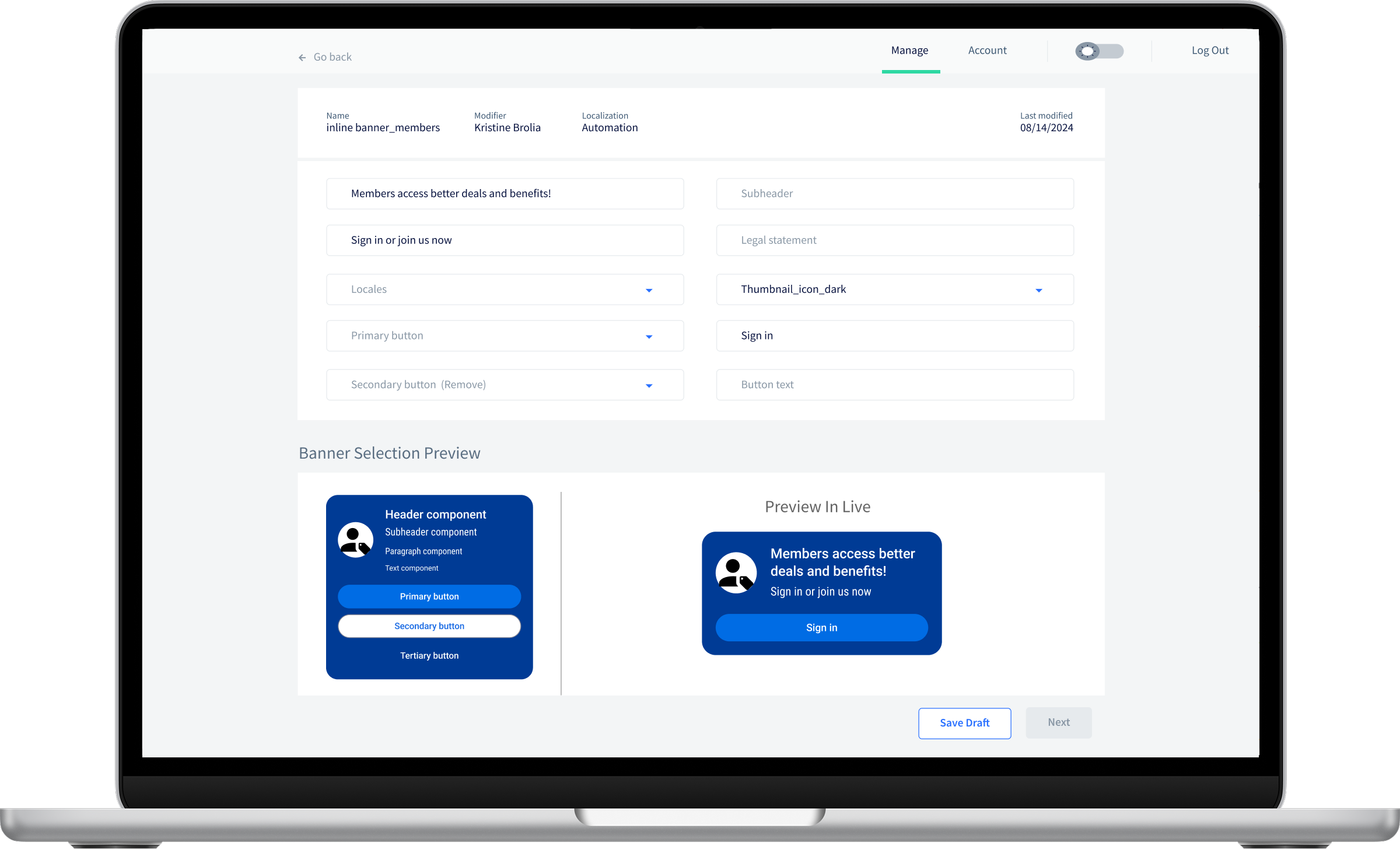
Building on these insights, we used quantitative research to understand user goals and behaviors at different stages of the funnel, and defined a benefits-driven vision for authentication. This enabled targeted explorations around placement, presentation, and personalized content, ensuring authentication moments aligned with user intent while remaining lightweight and non-intrusive.
Increasing authentication motivation required balancing conversion gains with page ownership, legal constraints, design system standards, and brand governance. While more explicit and benefit-driven messaging could attract greater attention, legal and marketing considerations limited how personalized or specific the content could be in certain contexts.
To navigate these trade-offs, we prioritized high-intent moments where authentication added clear user value. This allowed us to increase engagement without compromising brand consistency or regulatory boundaries.
SOLUTION HIGHLIGHTS
Rather than designing for edge cases, we focused on dominant behaviors that drove the majority of user decisions and conversions. We audited existing authentication entry points and mapped the end-to-end shopping funnel to surface gaps, assumptions, and unanswered questions.
Because our goal was to understand motivation patterns across the funnel, we chose quantitative research over qualitative interviews. Through research with 65+ participants, we identified primary, secondary, and low-intent tasks at each funnel stage, clarifying where authentication added value versus created friction.
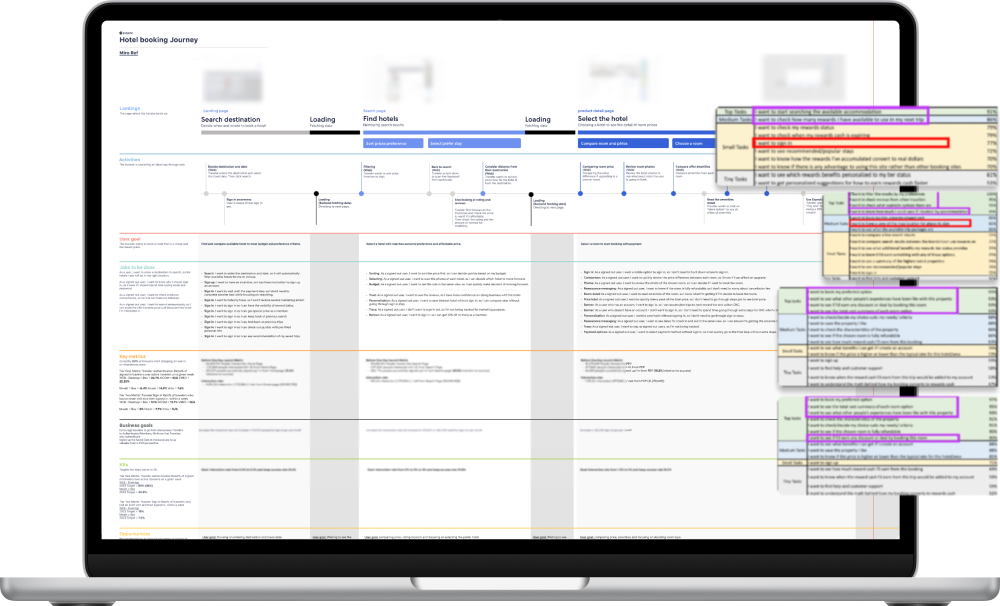
User journey with quantitative research. Intentionally blurred. Illustrative purposes only.
One high-impact authentication opportunity required placement on a page owned by another product stakeholder, who initially rejected the recommendation due to concerns about disruption and conversion risk.
Rather than pushing the design direction, we partnered with Product to propose a controlled testing strategy — a 5-day experiment in a single point of sale, with clear success criteria:
The test results confirmed a measurable increase in authentication without impacting bookings conversion rate, validating the UX hypothesis and establishing trust in a data-driven decision framework.
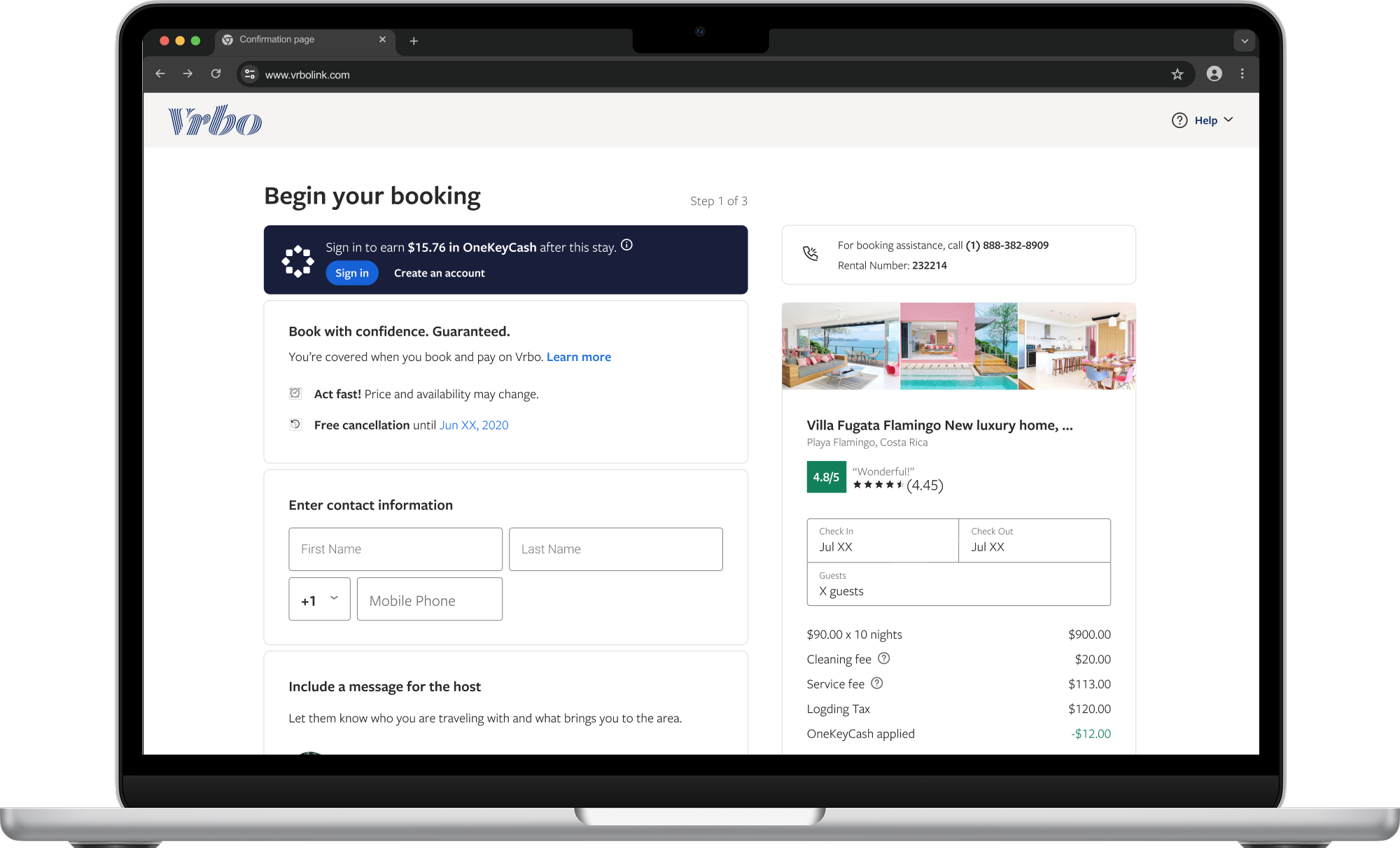
Illustrative example only. Not a final or production UI.
IMPACT & RESULT
Reduced Effort
Research insights were designed for reuse across multiple initiatives, reducing duplicated effort and long-term design investment.
Scalable Framework
Established a scalable content framework that clarified user value and increased motivation to authenticate.
16% Sign-in Increase
Leveraged data to validate UX hypotheses and influence product decisions, driving a 16% increase in authentication rate within 5 days at a single point of sale.