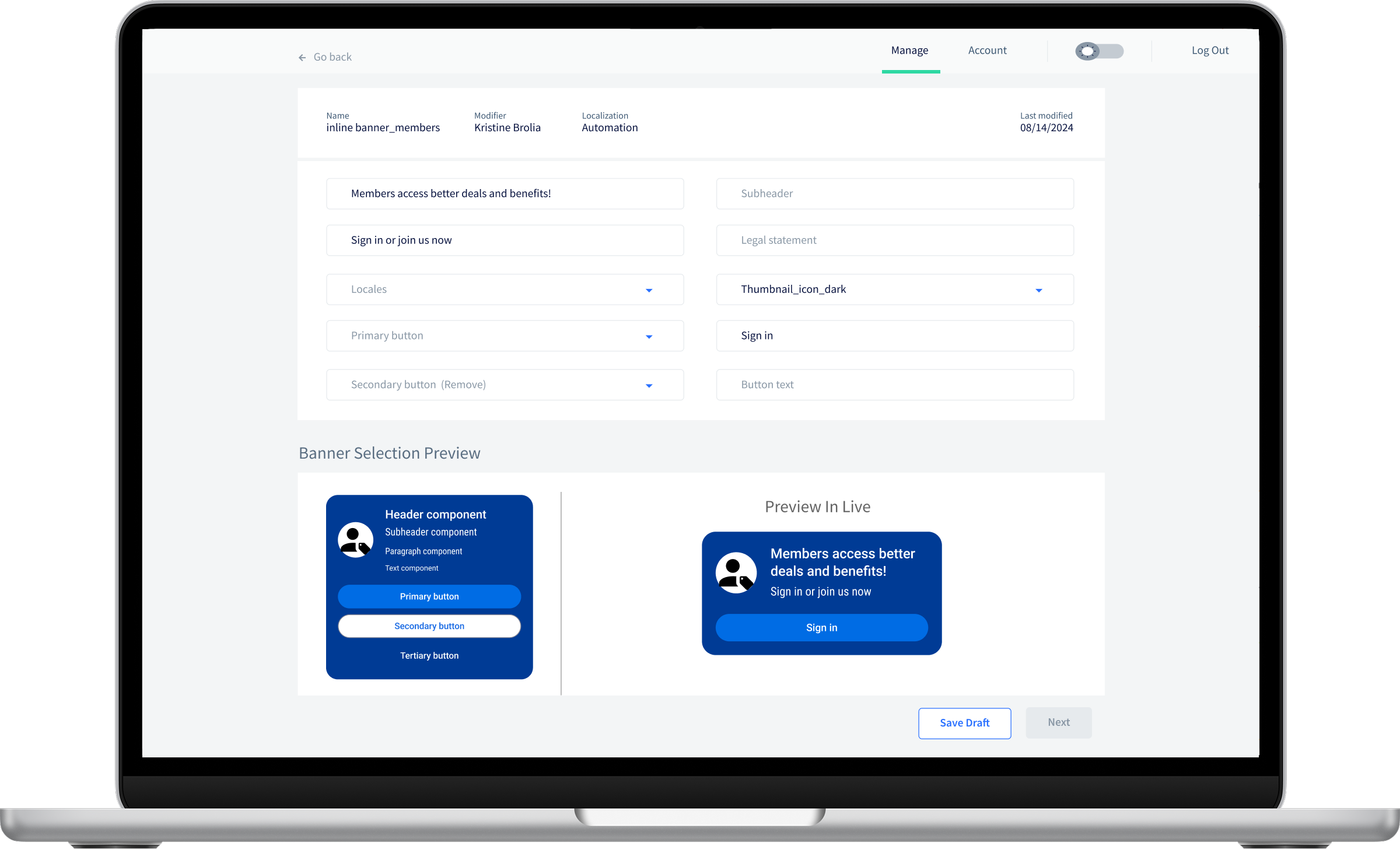
A scalable authentication entry system that standardized access patterns across 1,000+ pages.
Impact
Illustrative example only. Not a final or production UI.
What is this?
Context
This banner design serves as a foundational entry point for authentication on all page types, defining how sign-in and account creation are safely and consistently initiated across 1,000+ pages.
Why does it matter?
The Problem
Frequent banner updates caused recurring engineering work, inconsistent designs across teams, long localization cycles, and delayed delivery. Resources couldn't allocate to higher-impact initiatives.
How was it solved?
Solution
Designed a CMS-powered banner template that balances flexibility with governance, maintains design consistency, and enables non-technical teams to publish updates without additional tech support.
What changed?
Impact
Significantly reduced engineering workload and the runtime of localization from ~120 hours to 3 hours per update, standardized experience, enabled self-serve publishing by product teams.
My role in this case
DECISION PROCESS
A "simple banner update" sounds simple, but it's actually a recurring organizational bottleneck in reality.
As a result, engineering capacity was repeatedly consumed by low-leverage work, delaying higher-impact initiatives and increasing internal business operational cost.
To solve the problem at scale, the solution had to support:
This shifted the problem from "designing a banner" to designing a system that could survive organizational and technical complexity.
Instead of starting with visuals, I focused on:
The guiding principle was: If the system works for the worst-case scenario, it will scale effortlessly for everything else.
Several proposed designs were not technically feasible due to CMS platform limitations. Rather than treating this as a blocker, I worked closely with engineers to:
The final solution represents a balanced outcome, where design intent and technical reality reinforced each other.
SOLUTION HIGHLIGHTS
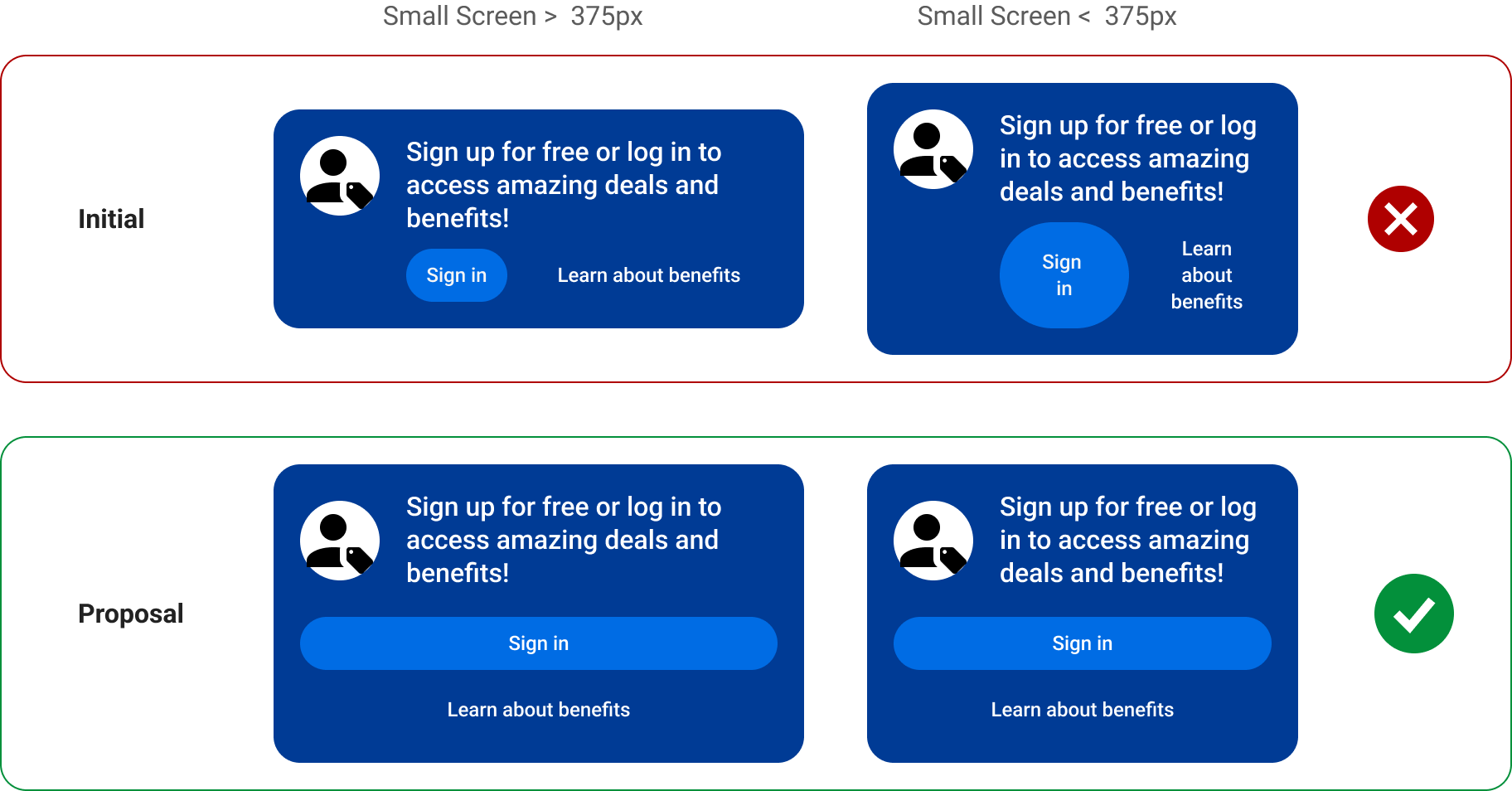
Improved layout resilience by restructuring CTA placement to prevent wrapping and maintain usability across smaller screens, longer localized content, and accessibility settings.
This ensured:
Illustrative example only. Not a final or production UI.
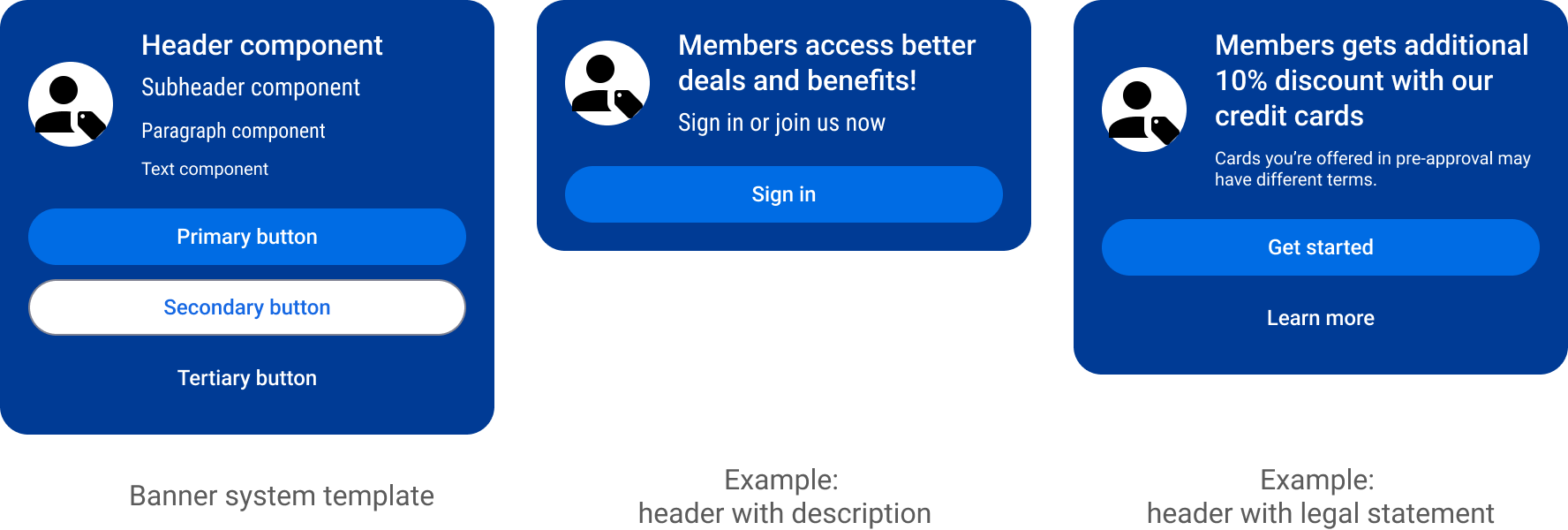
Enabled governed flexibility by defining configurable banner layouts that support diverse use cases while preserving consistency, accessibility, and compliance.
This eliminated the need for custom engineering work while maintaining consistency and flexibility.
Illustrative example only. Not a final or production UI.
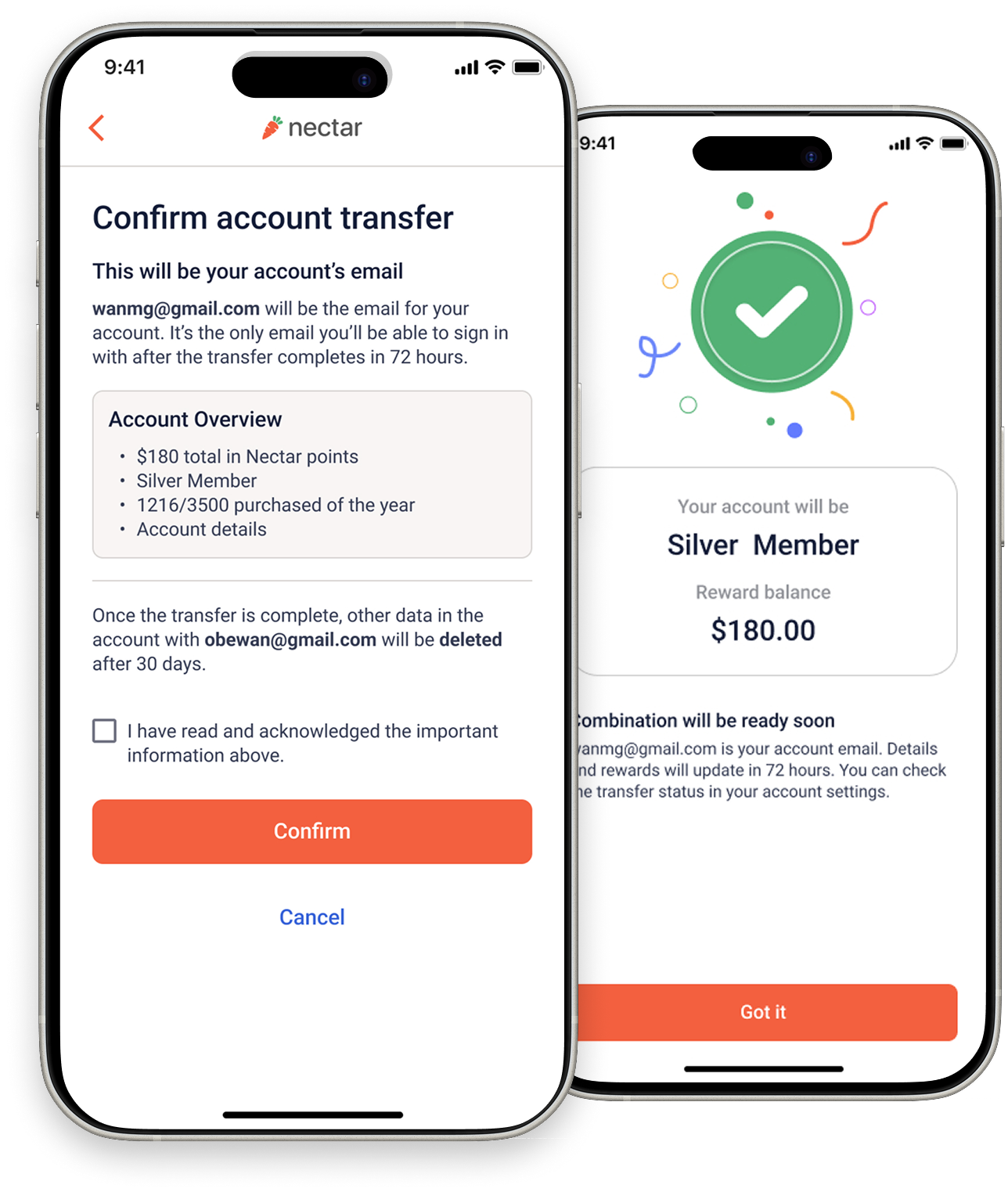
IMPACT & RESULT
Operational Efficiency
This system reduced operational cost while freeing teams to focus on higher-impact work. Localization runtime significantly reduced from 120 hours to 3 hours.
Self-Service Publishing
Product can safely configure and publish the same day through governed design options within the CMS. Product managers can ship updates independently without design or engineering support.
Faster Delivery
Design consistency successfully maintained across 1,000+ pages. Reduced design-to-development turnaround by 75%, from 4 weeks to 1 week.